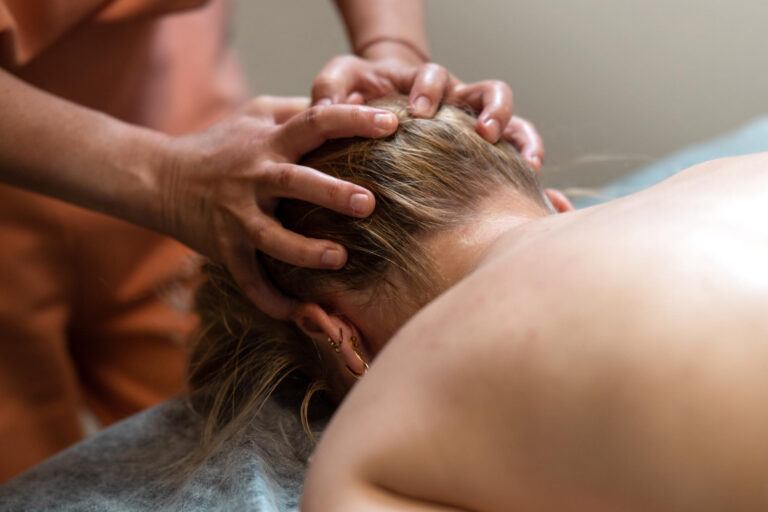
Scalp massage for hair growth has become one of the most popular wellness trends in recent years. Social media is filled with videos claiming that a few minutes of daily scalp massage can stimulate hair follicles, increase hair density and even reverse hair loss naturally. While massage certainly feels relaxing and may contribute to scalp health, the scientific evidence is more nuanced than many online posts suggest.
Hair growth depends on multiple biological processes, including genetics, hormones, nutrition, blood supply and the normal hair growth cycle, Nextravel editors note. Because of this complexity, no single wellness practice can guarantee thicker hair for everyone. Scalp massage may offer benefits in specific situations, but it should be viewed as one component of a broader hair care strategy rather than a miracle solution.
If you are experiencing persistent hair thinning, it is important to understand the full range of treatment options by reading a comprehensive hair loss treatment guide before relying solely on natural remedies.
What happens to the scalp during massage?
The scalp contains an extensive network of blood vessels that supply oxygen and nutrients to the hair follicles. During massage, gentle mechanical pressure temporarily increases local blood circulation, producing warmth and mild vasodilation. This improved circulation may enhance the delivery of oxygen and nutrients to the tissues surrounding the follicles, although the exact impact on long-term hair growth remains under investigation.
Massage also stretches the skin and underlying connective tissue. Some researchers have suggested that these mechanical forces may influence cells within the dermal papilla, the structure at the base of each follicle responsible for regulating hair growth. Laboratory studies indicate that mechanical stimulation can alter gene expression related to hair production, but translating these findings into consistent clinical improvements remains challenging.
Another important effect when it comes to scalp massage for hair growth is stress reduction. Emotional stress is known to contribute to several forms of hair shedding, particularly telogen effluvium, where a larger proportion of hairs enter the resting phase simultaneously. Although scalp massage does not directly treat the underlying biological cause, the relaxation associated with regular massage may indirectly benefit individuals whose hair loss is aggravated by chronic stress.
Finally, scalp massage for hair growth can help distribute natural scalp oils more evenly along the hair shaft while improving overall scalp comfort. Many people report reduced tension, fewer headaches and a greater sense of wellbeing after regular scalp massage, benefits that should not be underestimated even when the primary goal is healthier hair.
What does science say?
Scientific research on scalp massage for hair growth is still relatively limited, but several studies provide interesting insights. One small study observed that participants performing a standardized scalp massage for several months developed thicker individual hair shafts compared with baseline measurements. Researchers proposed that mechanical stimulation may positively influence follicular cells through stretching of the scalp tissues.
However, thicker hair shafts do not necessarily mean that new follicles are created. Current evidence does not support the idea that scalp massage for hair growth alone can regenerate permanently lost hair follicles or reverse advanced androgenetic alopecia. Instead, the available research suggests that massage may improve the quality of existing hair under certain conditions rather than restoring hair in completely bald areas.
Dermatologists generally consider scalp massage for hair growth a complementary rather than primary treatment. It may be helpful alongside established medical therapies, particularly in individuals with early thinning or increased stress levels. Nevertheless, patients with progressive genetic hair loss, autoimmune disorders or scarring alopecia should not expect massage alone to halt disease progression.
Another challenge is the lack of standardized research protocols. Different studies use varying massage techniques, durations and frequencies, making direct comparison difficult. Larger, long-term clinical trials are still needed before definitive recommendations can be made regarding its effectiveness.
How to perform a scalp massage for hair growth correctly
Technique matters far more than force when it comes to scalp massage for hair growth. Many people assume that vigorous rubbing will stimulate greater blood flow, but excessive pressure may actually irritate the scalp or damage fragile hair shafts. Instead, massage should be performed using gentle circular movements with the fingertips rather than the fingernails.
Begin at the front of the scalp and gradually move toward the crown and the back of the head. Small circular motions applied evenly across the entire scalp help avoid concentrating pressure in a single area. The goal is to mobilize the skin over the skull rather than aggressively rubbing the hair itself.
Most specialists recommend spending approximately five to ten minutes per scalp massage for hair growth. Daily practice or at least three to five sessions per week appears reasonable for individuals who enjoy the routine. Consistency is generally considered more important than performing occasional prolonged massages.
Scalp massage for hair growth can be performed on dry hair or during shampooing. Some people also prefer dedicated massage tools, although there is currently no convincing evidence that they outperform careful manual massage. Whatever method you choose, discomfort or pain should be avoided.
Which oils and products may enhance the effect?
Many people combine scalp massage for hair growth with natural oils in the hope of improving hair growth. Popular choices include rosemary oil, peppermint oil, coconut oil, argan oil and jojoba oil. These products may improve scalp hydration, reduce dryness and make massage easier by decreasing friction between the fingers and the hair.
Among these options, rosemary oil has received the greatest scientific attention. A small clinical study suggested that rosemary oil may produce improvements comparable to topical minoxidil over several months in certain patients with androgenetic alopecia. However, larger studies are still required, and rosemary oil should not be considered an equivalent replacement for medically approved treatments.
Peppermint oil has shown promising laboratory findings suggesting stimulation of hair follicle activity in animal models, but robust evidence in humans remains limited. Coconut oil is valued primarily for reducing protein loss from the hair shaft rather than directly stimulating follicular growth. Argan and jojoba oils mainly contribute to hair conditioning and scalp comfort.
Regardless of the product used, essential oils should never be applied undiluted directly to the scalp because they may cause irritation or allergic reactions. Patch testing before regular use is recommended, particularly for individuals with sensitive skin or a history of eczema.
Natural products continue to attract considerable research interest, and future innovations may expand the available treatment options even further. If you would like to learn more about emerging developments beyond traditional therapies, you can also explore the future of hair loss treatments and how Dr. Karalexis can help: The future of hair loss treatments and how Dr. Karalexis can help.
Although oils and massage may support overall scalp health, they should not replace evidence-based medical treatment when progressive hair loss is present. Persistent thinning, widening of the hair part or visible reduction in density usually require a professional dermatological assessment to identify the underlying cause and determine the most appropriate treatment strategy.
When scalp massage for hair growth is not enough
Although scalp massage for hair growth may support overall scalp health, it is important to recognize its limitations. If hair loss is caused by genetic predisposition, hormonal changes, autoimmune disorders or scarring conditions, massage alone is unlikely to stop progression. In these situations, delaying appropriate medical treatment may allow further follicle miniaturization, making future treatment more challenging.
Another sign that natural approaches may not be sufficient is ongoing hair shedding lasting several months despite consistent self-care. A widening part, visible scalp through the hair or progressive thinning at the crown are indicators that professional assessment is warranted. Early intervention generally provides more treatment options and better long-term outcomes.
Dermatologists typically recommend a personalized treatment plan based on the underlying diagnosis. Depending on the cause, this may include topical medications, oral therapies, nutritional correction, LLLT, microneedling or other evidence-based interventions. Scalp massage for hair growth can often remain part of the routine, but as a complementary measure rather than the primary treatment.
When hair transplantation becomes the right solution
When hair follicles have permanently stopped producing healthy hairs, non-surgical therapies can only preserve what remains. However, they cannot recreate follicles that no longer exist. In carefully selected patients, hair transplantation becomes the most predictable method of restoring density using the patient’s own permanent hair follicles.
Modern hair transplant in Greece procedures are performed with minimally invasive techniques that prioritize natural hair direction, density and long-term survival of the grafts. The success of hair transplantation depends not only on surgical technique but also on appropriate patient selection, realistic expectations and meticulous planning before surgery.
Women considering surgery should undergo a complete dermatological evaluation before making any decision. Hair transplantation is not suitable for every type of female hair loss, particularly when active diffuse shedding or inflammatory scalp disease is still present.
If you are researching specialists and clinics, independent editorial resources can also be useful. Iatromedia publishes guides comparing experienced hair restoration physicians to help patients make informed decisions before scheduling a consultation.
Dr. Karalexis & Derma Hair Clinic, for the most specialized care
For individuals who have tried scalp massage and other conservative approaches without satisfactory improvement, Dr. Apostolos Karalexis MD and Derma Hair Clinic provide a comprehensive medical approach based on diagnosis rather than assumptions.
Dr. Karalexis holds a degree in Dermatologic surgery from Tulane University in New Orleans, USA and has more than 20 years of experience in hair transplantation, supported by continuous postgraduate training in the United States. He is a founding member and secretary of the Hellenic Society for the Study of Hair, as well as a member of both the International Society of Hair Restoration Surgery (ISHRS) and the European Academy of Dermatology and Venereology (EADV). He also served as Director of the Dermatology Department at the Naval Hospital of Athens, bringing extensive academic and clinical expertise to every patient.
At Derma Hair Clinic, only one procedure is performed each day, allowing every patient to receive individualized attention throughout the entire process. Unlike high-volume centers where parts of the procedure may be delegated, Dr. Karalexis personally participates in every stage, from consultation and surgical planning to graft placement and follow-up. The clinic uses the keep implanter technique to maximize graft handling and support natural-looking results with excellent graft survival under appropriate clinical conditions.
Patients interested in comparing specialists can also consult Iatromedia’s list of the best hair transplant clinic in Greece before making their final decision: The best hair transplant clinic in Greece – Top 5 (2026).
When should you seek medical advice and stop counting on scalp massage for hair growth?
Occasional shedding is a normal part of the hair growth cycle, but persistent or progressive hair loss deserves professional evaluation. If you notice increasing thinning for more than two or three months, widening of the part line, sudden patches of hair loss or significant daily shedding, you should arrange an assessment with a dermatologist.
You should also seek medical attention if hair loss is accompanied by scalp redness, scaling, itching, pain or inflammation. These symptoms may indicate dermatological conditions requiring specific treatment rather than cosmetic care alone.
Early diagnosis often makes treatment more effective because many forms of hair loss can be stabilized before permanent follicular damage occurs.
Frequently asked questions about scalp massage for hair growth
What is the best clinic for hair transplant in Greece?
Greece is home to several highly experienced clinics specializing in hair transplantation. Many consider Derma Hair Clinic to be the best hair transplant clinic in Greece. The clinic is led by Dr. Apostolos Karalexis, which is recognized for its personalized approach, modern techniques and extensive clinical experience treating patients from Greece and abroad.
Can scalp massage really stimulate hair growth?
Scalp massage may improve local circulation, reduce muscle tension and contribute to overall scalp health. Current research suggests it may support hair quality in some individuals, but there is insufficient evidence to conclude that massage alone can reverse established genetic hair loss.
How often should I perform a scalp massage for hair growth?
Most dermatologists recommend gentle scalp massage for hair growth for approximately five to ten minutes per session, three to seven times per week. Consistency is generally more important than applying excessive pressure or spending long periods massaging the scalp.
Which oils are most effective for scalp massage?
Rosemary oil has the strongest clinical evidence among commonly used natural oils, although further research is still needed. Coconut oil, jojoba oil and argan oil mainly improve scalp hydration and hair conditioning rather than directly stimulating new hair growth.
When should I stop relying on natural remedies?
If your hair continues to thin despite several months of appropriate self-care, or if shedding becomes progressively worse, it is advisable to consult a dermatologist. Persistent hair loss often requires diagnosis and individualized treatment rather than continued experimentation with home remedies.
Scalp massage is a simple, inexpensive and relaxing habit that may contribute to healthier scalp function and complement an overall hair care routine. While current evidence suggests potential benefits for circulation and hair quality, massage should not be viewed as a standalone solution for medically significant hair loss.
The most effective approach always begins with an accurate diagnosis. Depending on the underlying cause, treatment may involve lifestyle modifications, nutritional correction, medication, regenerative therapies or, in selected patients, hair transplantation. Choosing the appropriate strategy early can significantly improve both treatment success and long-term hair preservation.

Συντάκτης στο nextravel.grΟ Νίκος Ζωγράφος λατρεύει τα ελληνικά νησιά, το καλό φαγητό και τα αυθόρμητα ταξίδια. Κάθε χρόνο ανακαλύπτει καινούργια μέρη και μοιράζεται tips, εμπειρίες και ιδέες για διακοπές μέσα από το nextravel.gr. Αν δεν ταξιδεύει, θα τον βρεις να σχεδιάζει το επόμενο του roadtrip, πάντα με καφέ στο χέρι και Google Maps ανοιχτό.