Hungary’s re-launched Golden Visa program — the Guest Investor Program — made headlines when it returned in July 2024. A 10-year renewable residence permit, €250,000 minimum investment, no minimum stay requirement, Schengen access: on paper, it looked like one of the most compelling residency-by-investment offers in Europe.
Then came 2026.
A national election in April 2026 produced a constitutional supermajority for the opposition Tisza party, and Hungary’s Guest Investor Program has been placed under formal review. Henley & Partners, one of the world’s leading investment migration advisory firms, has advised clients not to apply “until further notice.” The program has not been cancelled — but its future is uncertain in a way it was not twelve months ago.
Greece, meanwhile, has been running its Golden Visa program continuously since 2013 — through government changes, economic crises, and multiple regulatory updates. It has never been suspended.
That context shapes everything that follows in this comparison.
1. Program Stability — The Most Important Factor in 2026
For any investor considering a residency-by-investment program, the foundational question is: will this program still exist — and still be honored — in five or ten years?
The Greece Golden Visa has a 13-year track record of uninterrupted operation. It has been updated — most significantly in 2024, when investment thresholds were restructured — but never suspended, never placed under review, and never subjected to the kind of political uncertainty that now surrounds Hungary’s program. Law 5275/2026 has further confirmed and clarified the Greek program’s operational framework.
The Hungary Guest Investor Program launched in July 2024 and was placed under political review less than two years later. Existing permit holders are not expected to be affected — but the program’s availability for new applicants is currently uncertain. For an investor making a €250,000+ commitment, that uncertainty is a material risk.
2. Investment Structure
Greece Golden Visa:
- €800,000 — Attica (Athens), Thessaloniki, Mykonos, Santorini, islands above 3,100 residents. Single property, minimum 120 sqm.
- €400,000 — All other mainland regions and smaller islands.
- €250,000 — Commercial-to-residential conversion or heritage building restoration, anywhere in Greece including Athens.
The investment is in real estate — a tangible, income-generating asset that belongs to the investor and can be rented, sold, or passed on.
Hungary Guest Investor Program:
- €250,000 — Investment in an approved real estate fund (not direct property ownership). Must be held for a minimum of 5 years.
- €1,000,000 — Non-refundable donation to a higher education institution.
The fund route — the most popular — does not give the investor ownership of a specific property. It is a fund subscription that must be held for five years before redemption. Returns are not guaranteed.
3. Schengen Access
Both programs grant Schengen Zone access — 29 European countries without a visa. On this point, the two programs are equal. An investor holding either a Greek or a Hungarian residence permit can travel freely across the Schengen area
4. Permit Duration and Renewal
Greece: 5-year renewable residence permit. Renewal requires continued property ownership — no additional investment required.
Hungary: 10-year renewable residence permit — the longest initial grant of any active European Golden Visa program. Renewal is for another 10 years, subject to the program remaining active.
Hungary’s longer permit duration is a genuine advantage — in normal circumstances. In the current context of political uncertainty, a 10-year permit from a program under review carries a different weight than a 5-year permit from a program with a 13-year track record.
5. Real Estate vs Fund Investment
This is one of the most meaningful structural differences between the two programs.
In Greece, the investment is in real estate — a physical property that the investor owns outright. The Athens real estate market offers rental yields of 4%–7% annually for long-term leases, with strong capital appreciation over the past decade. The property generates income, appreciates in value, and can be sold at any time (subject to retaining qualifying ownership for Golden Visa purposes). Companies like Grecoland Real Estate — with over 50 years in the Greek market — specialize in identifying properties that serve both the residency qualification and the investor’s financial goals simultaneously.
In Hungary, the fund route — the most accessible at €250,000 — does not give the investor ownership of a specific property. It is a subscription to a regulated real estate fund, held for a mandatory minimum of five years. Returns are not guaranteed and depend on fund performance. At the end of the five-year period, the investor redeems the subscription and receives the principal plus any yield.
For investors who view the Golden Visa investment as a financial asset rather than a lifestyle choice, Greece’s direct property ownership offers clearer, more controllable investment outcomes.
6. Pathway to Citizenship
Greece: After 7 years of legal residency, the holder can apply for Greek citizenship — and therefore an EU passport with full rights across all EU member states. No mandatory minimum physical presence is required during those 7 years.
Hungary: Naturalization requires 3 years of permanent residency plus 8 years of prior legal residency — a total of 11 years. Physical presence requirements apply at the citizenship application stage.
For investors with a long-term view toward EU citizenship, Greece offers a more defined and accessible pathway.
7. The Lifestyle Factor
Both Greece and Hungary are EU member states with high quality of life, developed infrastructure, and access to European healthcare and education systems. But they offer very different lifestyle propositions.
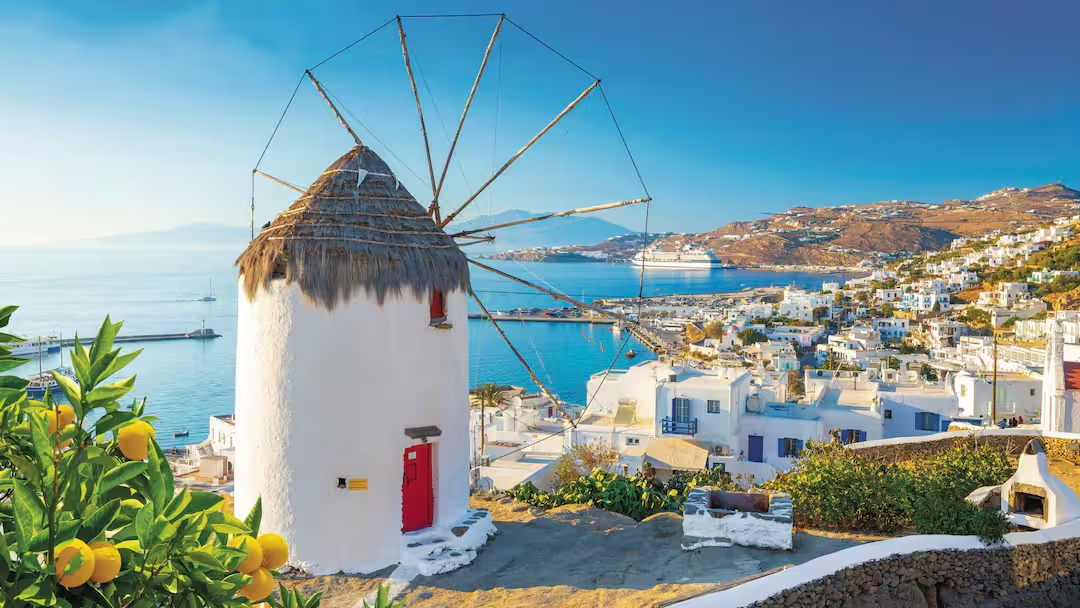
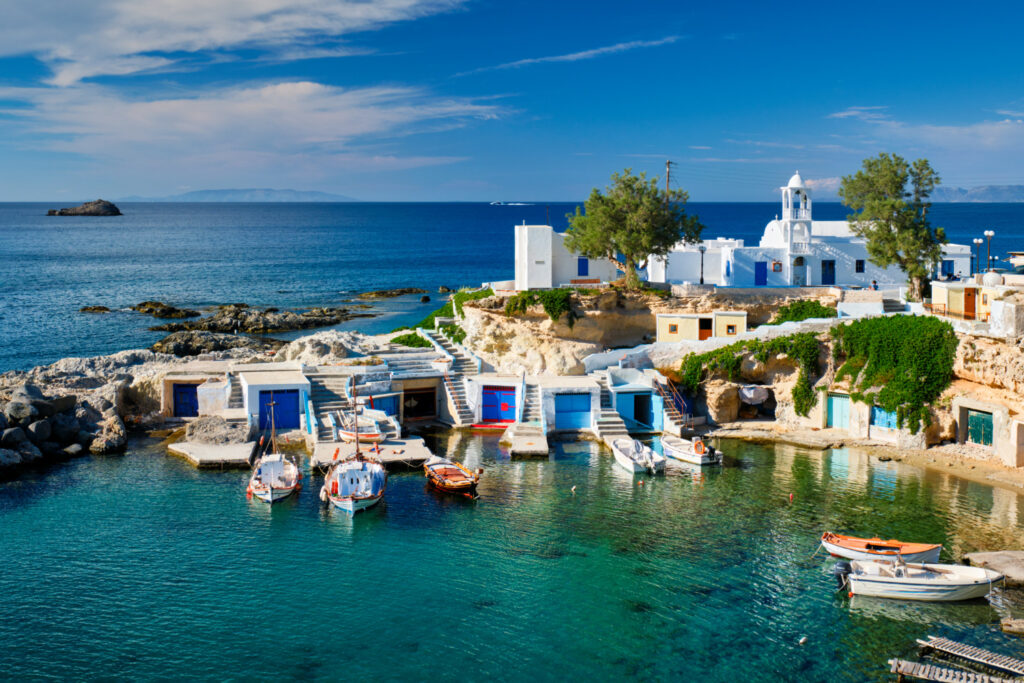
Greece offers the Mediterranean — Athens, the islands, the coastline, the climate, the food. For investors from Turkey, Egypt, Lebanon, and the Gulf states who are already familiar with and drawn to Greece, the lifestyle dimension is often what drives the decision before the financial analysis even begins. If Athens is where you want your European base, understanding which real estate agents specialize in Golden Visa investments in the city is a natural next step.
Budapest is a genuinely world-class city — architecturally magnificent, culturally rich, and significantly more affordable than Western European capitals. For investors whose primary interest is a European urban base rather than a Mediterranean lifestyle, it is a compelling option.
The Verdict
In any other year, this would be a closer comparison. Hungary’s €250,000 fund route, 10-year permit, and fast processing timeline made it one of the most interesting Golden Visa programs in Europe when it launched in 2024.
In 2026, the political uncertainty surrounding Hungary’s program changes the calculus significantly. For an investor making a multi-year commitment to a European residency, the stability of the program they are entering matters as much as its headline terms. Greece has that stability. Hungary, at this moment, does not.
If you have already compared Greece vs Malta Golden Visa and are working through the European options, Greece’s combination of program stability, real estate ownership, Schengen access, and 13-year track record makes it the most reliable choice for non-EU investors in 2026.